
TeliSwitch EMS is more than just EMS
as it incorporates features attributed to NMS. These features comprise:
- Physical network view
- Configurable route sets and rapid transition between these
- Automatic Fiber Recovery (AFR)
Scroll for more
Key Features
- Physical layers do not possess control channels, as higher layers do. Therefore, AODF may neither discover its neighbors nor detect fiber disruption. Instead, EMS implements network topology through port naming and receives fiber disruption alerts from the layer above.
- EMS communication with higher layers is accomplished by providing an interface to the OSS and SDN controller. This interface may trigger AFR and route set change. Network isolation to protect against cyber-attacks and otherwise compromised network parts could be implemented by one of the alternative route sets. Blocking higher layer ports by software will not necessarily do, if these have been hacked. Physically disconnecting fibers will.
- EMS supports network segmentation, associating AODF ports with various parties sharing the physical network and allowing any party to control its ports only.
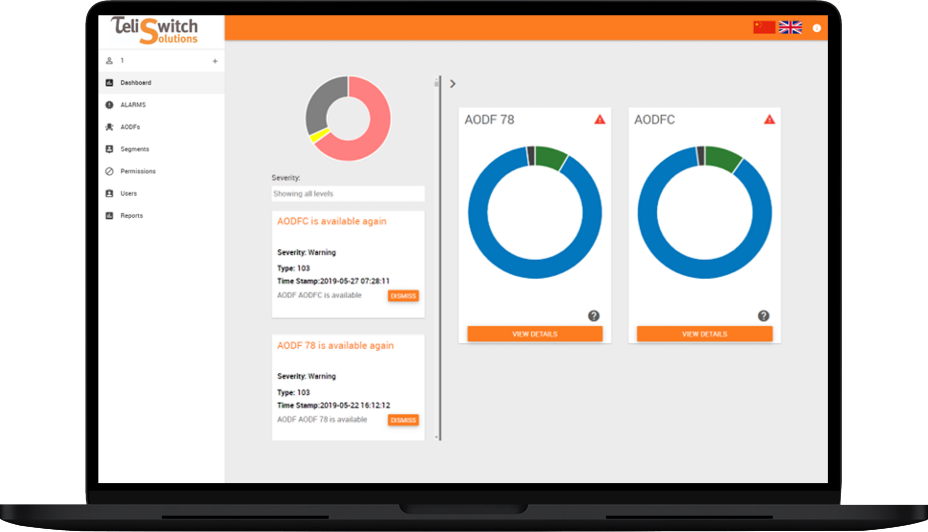
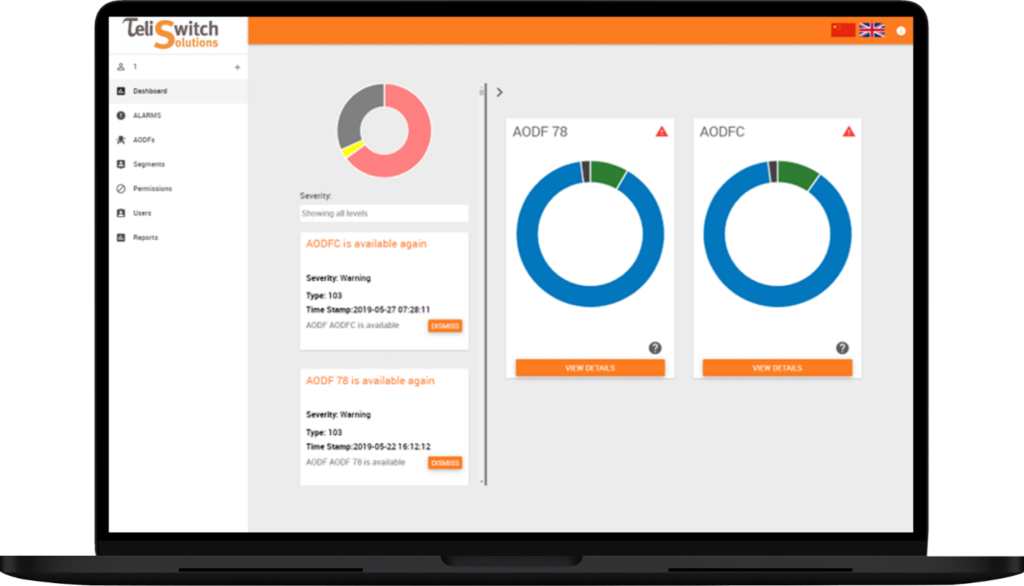
- EMS provides an intuitive MMI, operated through any browser via a secure protocol. EMS logs all actions performed and provides access to the log.
- The EMS implements access control features to safeguard the integrity of the optical layer infrastructure, preventing unauthorized operation. All communications to and from the AODF are authenticated and encrypted, end-to-end.

North-bound Interface
EMS communication with higher layers is accomplished by providing interface to OSS and SDN controller. This interface may trigger AFR and route set change. Network isolation to protect against cyber-attacks and otherwise compromised network parts could be implemented by one of the alternative route sets. Blocking higher layer ports by software will not necessarily do, if these have been hacked. Physically disconnecting fibers will.
The scope of operations across the interfaces encompasses:
The scope of operations across the interfaces encompasses:
- Alarms, for surveillance and trigger of response(s) by the staff assigned to the management of the optical layer
- Asset Management, for planning purposes
- Configuration Management, when network-wide activities must be coordinated across several layers of the network operations